Multi-agent AI for therapeutic target discovery
A virtual target review board,built from AI experts.
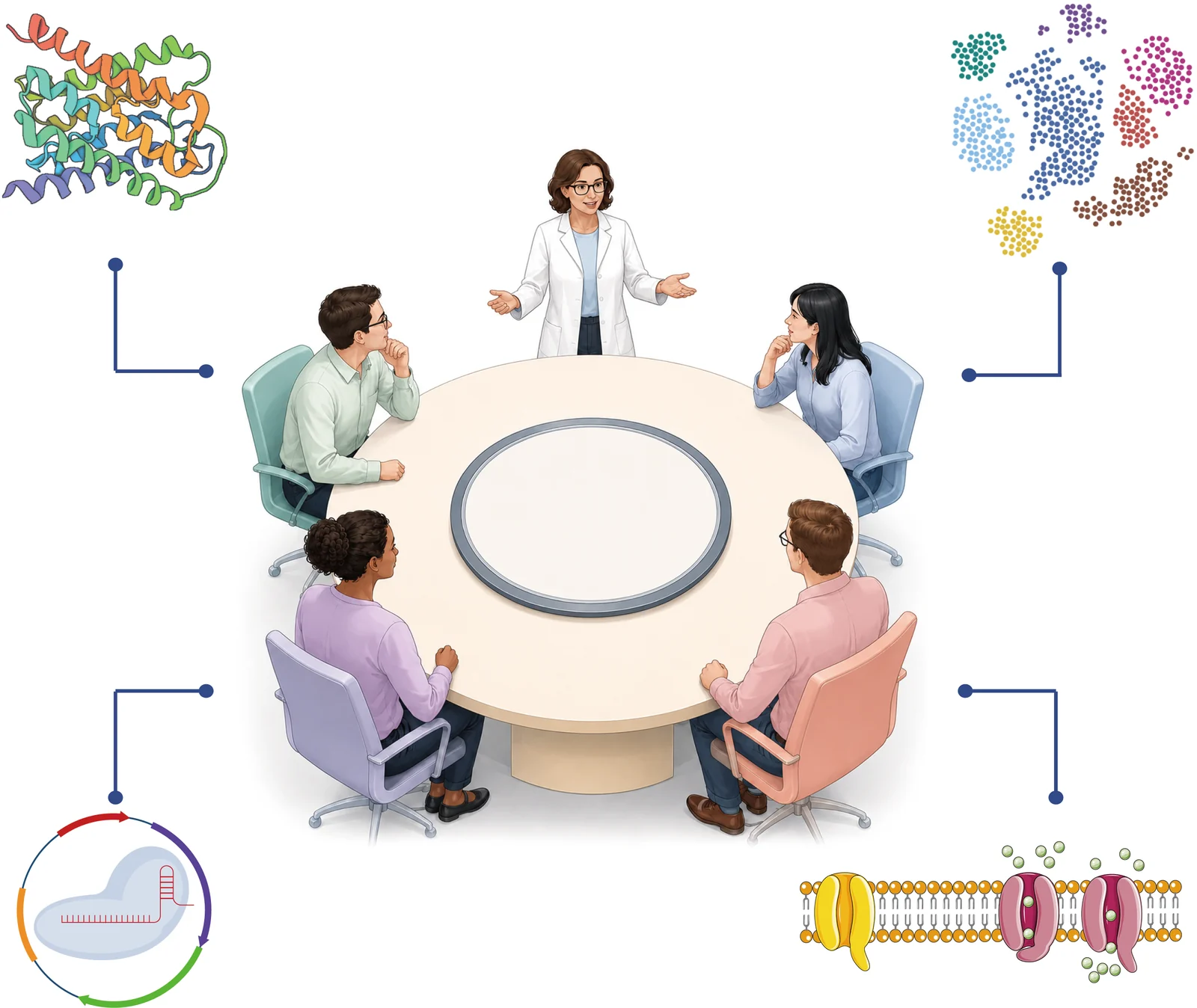
TargetMind convenes independent domain-expert agents to investigate, challenge and reconcile biomedical evidence, and ranks therapeutic targets only once they reach a structured consensus.
Step inside the TargetMind
Tools and databases
Every expert works from the same evidence infrastructure
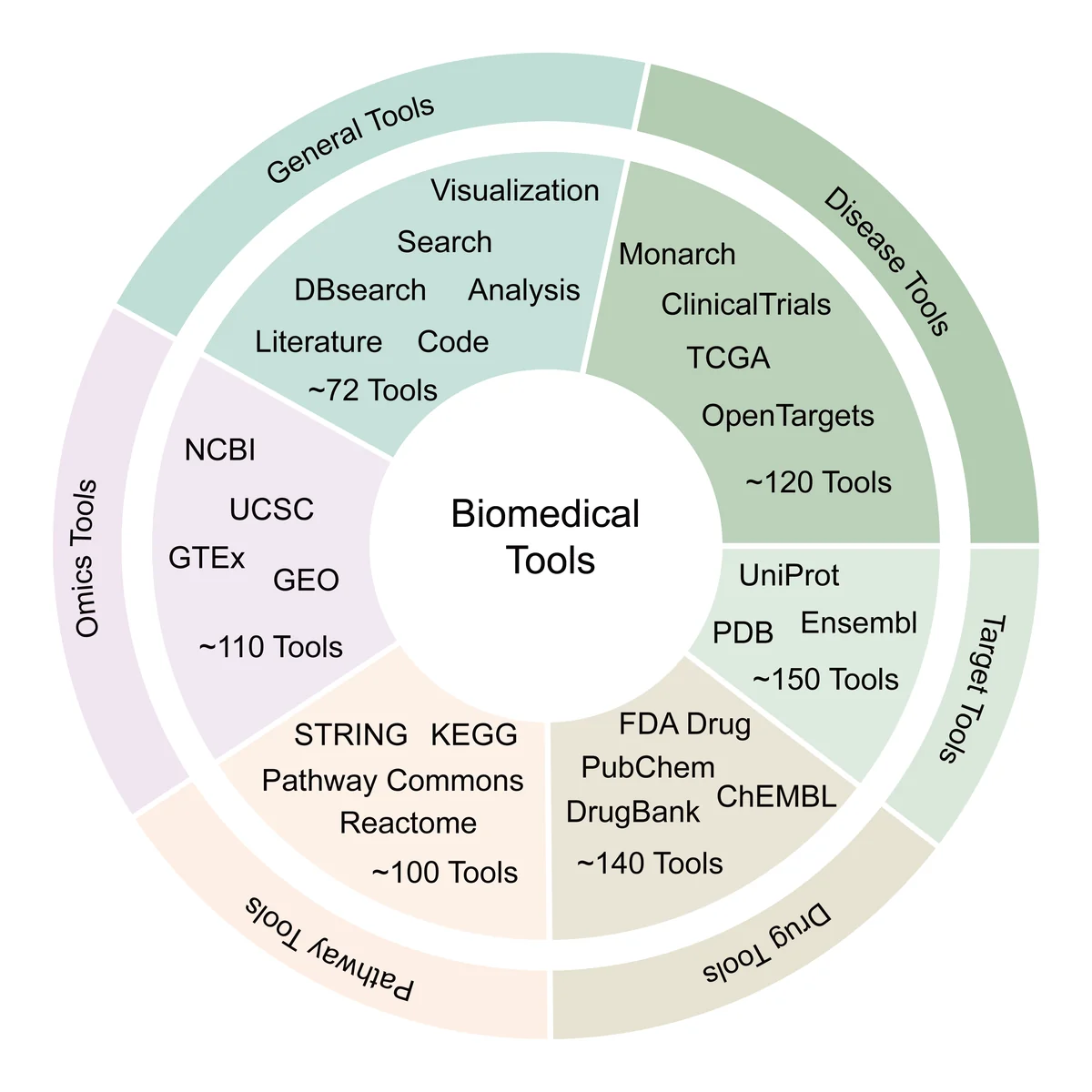
A registry of 694 biomedical tools spanning six domains gives each agent direct access to primary data sources rather than recalled knowledge.
- biomedical tools
- 694
- evidence domains
- 6
- data sources
- 27
Gene and protein identity, structures, tractability, safety, homology and druggability prediction.
Where the tools come from
- Open Targets34
- UniProt26
- ChEMBL20
- RCSB PDB20
- Ensembl17
- +2 more4
Highlights
get_target_tractability_by_ensemblIDRetrieve tractability assessments, including modality and values, for a specific target Ensembl ID
predict_single_gene_druggabilityPredicts the druggability of a single gene using a machine learning model
pdb_get_structureRetrieve detailed structure information for a PDB entry
get_target_safety_profile_by_ensemblIDRetrieve known target safety liabilities for a specific target Ensembl ID
Browse all 694 tools, the software environment and our datasets.
Counts come from the current tool registry; the per-domain values in the paper figure are approximate.
The platform
A working research platform, not just a paper
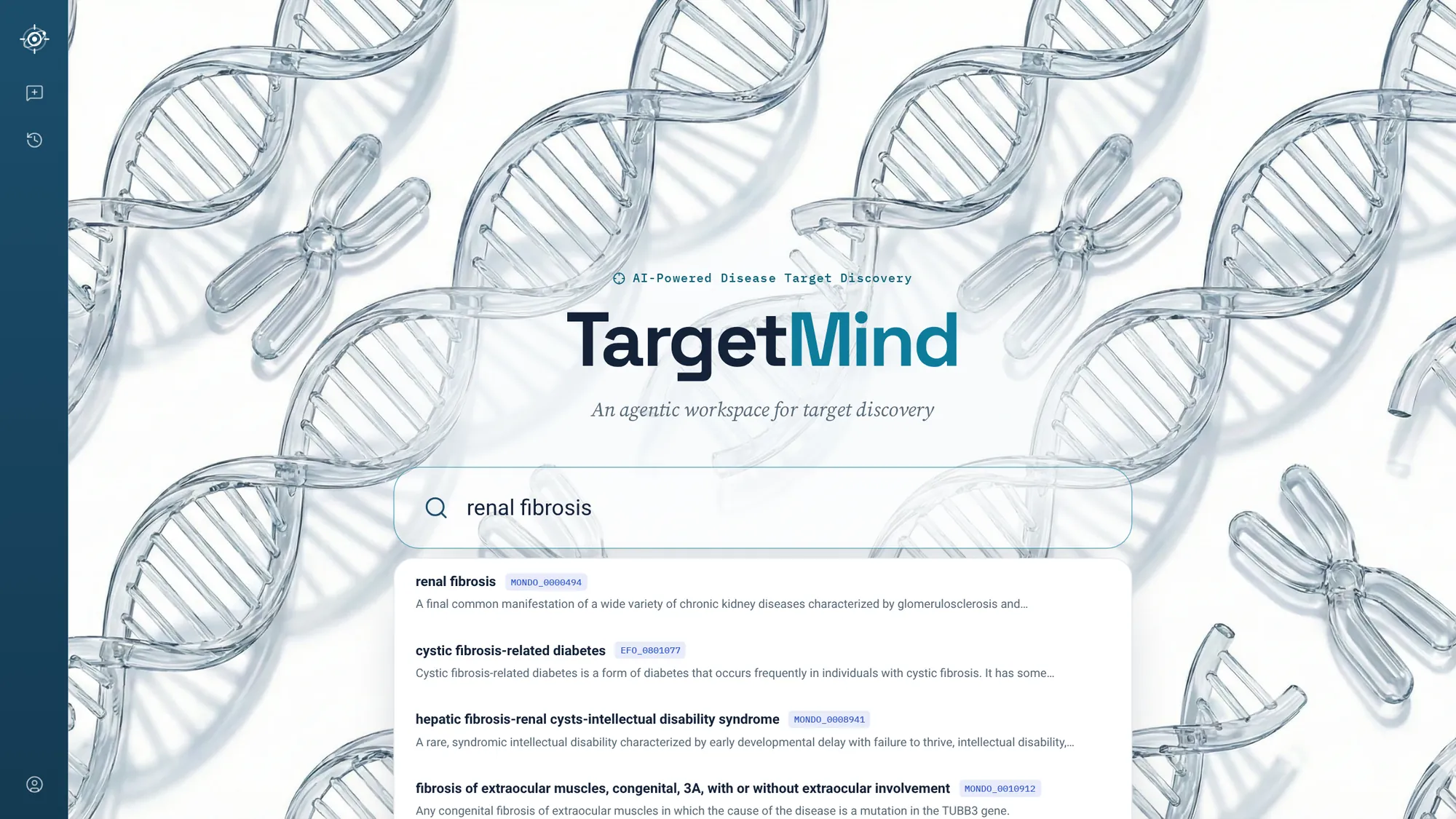
Start from a disease, let the review board plan and execute the investigation, and inspect every intermediate result — tables, code, reports and 3D structures — in one workspace.
Disease grounding
Search any disease and anchor the workspace to its OpenTargets ontology IDs (EFO / MONDO).
Live research plan
The agents publish a task plan and update its progress as they work.
Every result is a file
Tables, figures, code and reports land in the results panel — preview, filter and download.
Built-in 3D structures
PDB, SDF and other structure files open directly in an interactive Mol* viewer.
Benchmark
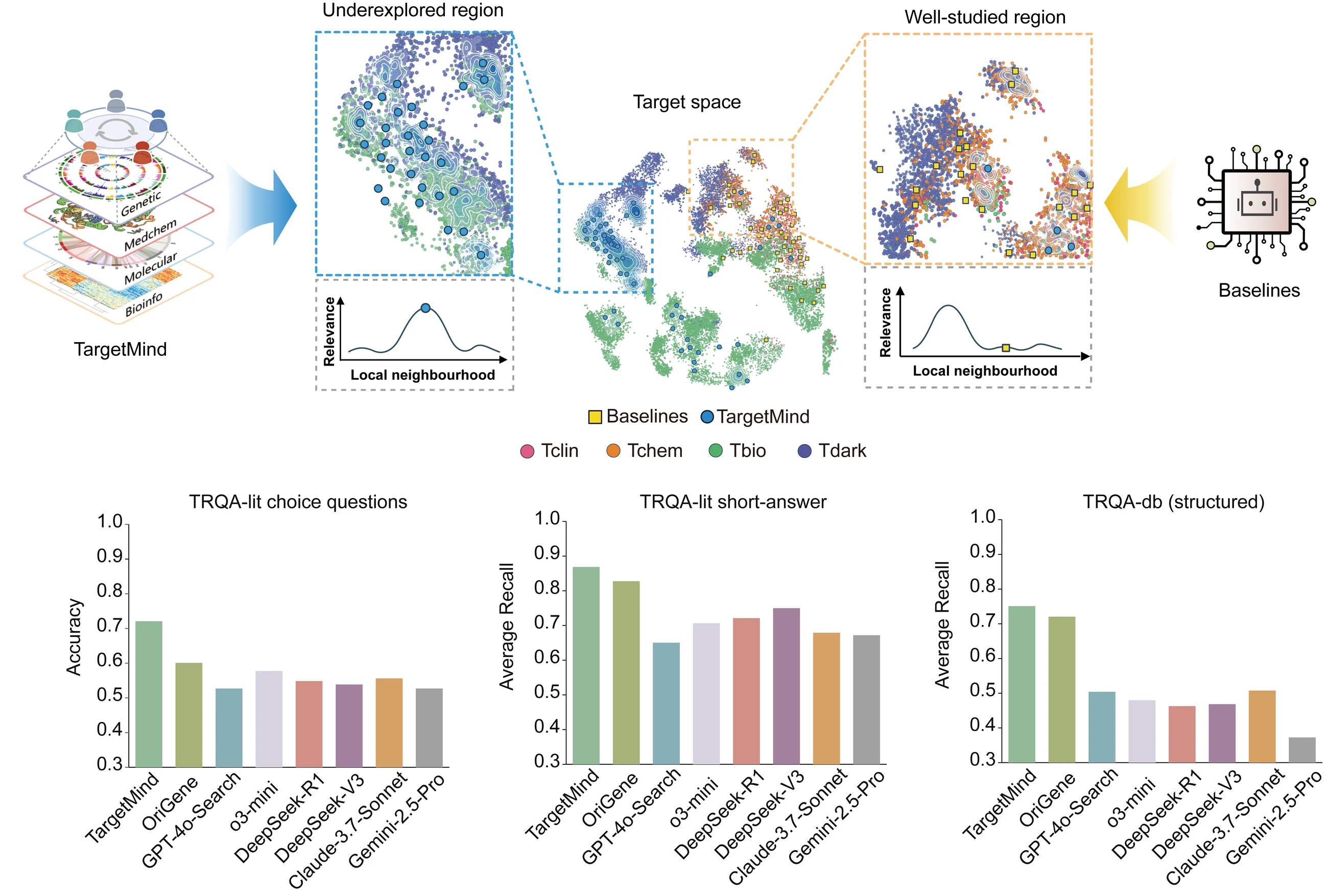
Stronger target reasoning, deeper into unexplored biology
Therapeutic target reasoning
Significantly outperforms state-of-the-art biomedical agents and general-purpose models across standardized therapeutic target reasoning tasks.
Novel target discovery
Navigates beyond well-studied genetic networks to prioritize highly underexplored targets with robust disease-linked support.
Experimental validation
From computational reasoning to the bench
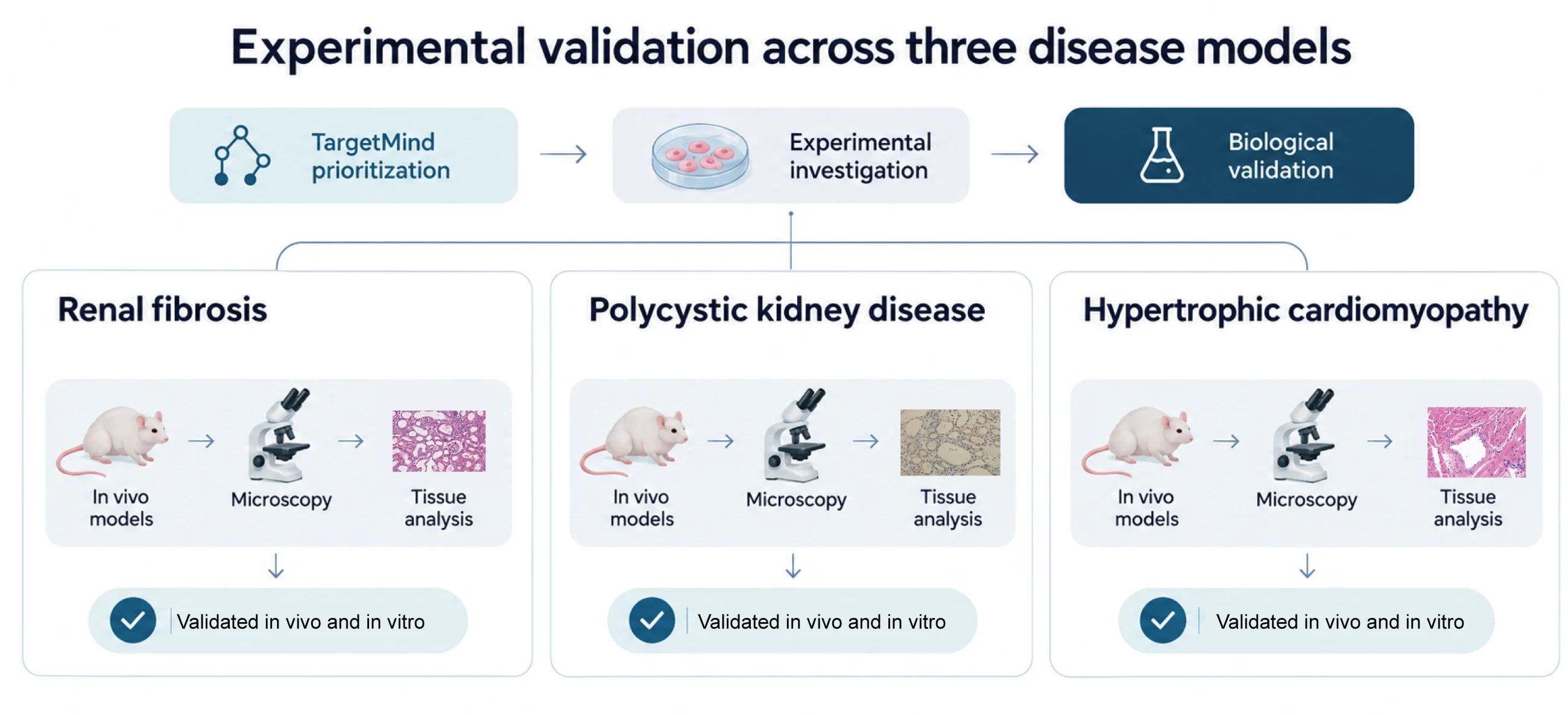
TargetMind's top-ranked candidates were taken into experimental investigation across three disease models — renal fibrosis, polycystic kidney disease and hypertrophic cardiomyopathy.